

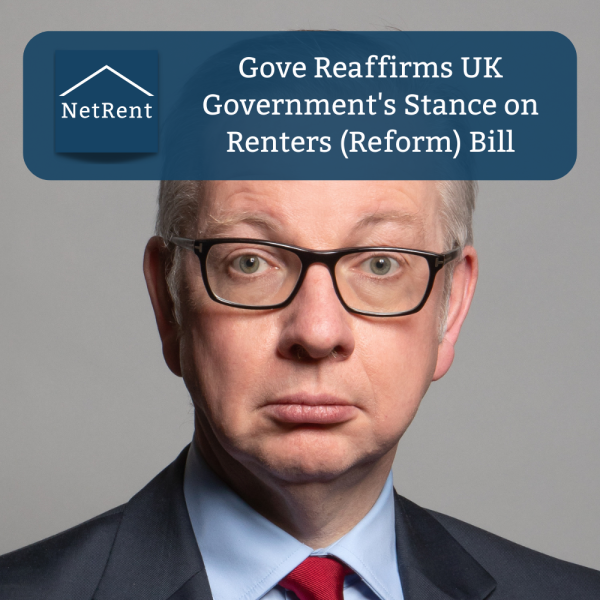
The Right Honourable Michael Gove, Member of Parliament, reasserted the United Kingdom Government’s unwavering commitment to strike a balance between tenants’ and landlords’ interests as he addressed the Levelling Up, Housing, and Communities Committee’s findings published on Friday, October 20th. In a comprehensive response, Gove addressed issues surrounding the Renters (Reform) Bill and outlined the government’s plans to address housing concerns across various sectors.
Acknowledging existing challenges with the Bill in the student housing market, the Secretary of State affirmed his dedication to the appropriate regulation of student housing. Gove expressed an open-minded approach to enhancing the Bill during the Committee stage, emphasizing the importance of listening to inputs from stakeholders, including the National Residential Landlords Association, to cater to the needs of the sector.
The role of the justice system remained central to the debate, with many responses underlining the necessity of ensuring that the courts are well-equipped before taking action to remove Section 21. The UK Government’s determination to eliminate Section 21, aimed at preventing bad landlords from intimidating tenants and silencing those who complain about housing conditions and repair needs, was a recurring theme. Alongside this commitment, Gove pledged to bolster provisions under Section 8 to facilitate the reliable regaining of possession when necessary, lowering the threshold for proving anti-social behaviour, and tackling unscrupulous tenants who abuse protections intended for vulnerable renters.
The response to the Committee’s findings had been notably delayed, prompting inquiries about potential future delays. Gove addressed issues related to short-term rentals, revealing that he had met with the founder of the leading short-term lets provider, Airbnb.
Gove highlighted the doubling in size of the private rental sector and emphasized the importance of protecting the rights of tenants. He acknowledged that many landlords maintain high standards of accommodation and sometimes require vacant possession for various reasons.
In a contrasting view, Member of Parliament Caroline Lucas voiced objections to claims made by Housing Minister Rachel Maclean, which she believed had the potential to mislead the House regarding the costs associated with meeting energy improvement targets, capped at £10,000. Gove refuted any notion that these claims were misleading.
Former Labour leader and now independent MP Jeremy Corbyn advocated for rent controls, claiming that tenants were indirectly subsidizing landlords’ mortgages, forcing residents out of their local areas. The UK Government countered by attributing these pressures to the cost of living crisis, stating that rent controls could inadvertently increase rents and burden those living in rented properties. The excessive rent concerns were said to be addressed by the first-tier housing tribunal.
Furthermore, Gove dismissed the claim that the abolition of Section 21, when combined with an improved Section 8 ground, would lead to a reduction in the number of available homes. He acknowledged the pressing need for more homes, a challenge being tackled separately.
In response to criticisms from Conservative MPs, many of whom are landlords themselves, Gove reminded the House that the Conservative Party had introduced a series of bills, including the Tenant Fees Act 2019, designed to protect vulnerable tenants and save taxpayers money. He reaffirmed that the government’s stance on abolishing Section 21 was not inconsistent with conservative values and principles.