

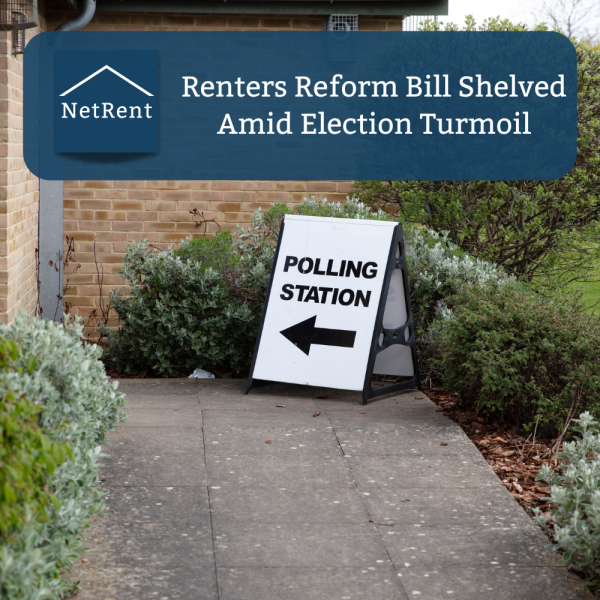
The anticipated overhaul of the UK’s rental laws, particularly the controversial “no-fault eviction,” faces an indefinite delay. The Renters Reform Bill, a crucial piece of legislation for the private rental sector, has stalled as Parliament rushes to wrap up before its dissolution on May 30th, ahead of the July 4th general election.
Announced by the Prime Minister last week, the impending election has plunged Parliament into the “wash-up” period—a frenzied phase for last-minute legislative approvals. Despite its importance, the Renters Reform Bill, five years in the making, failed to reach the critical third reading in the House of Lords by Friday’s deadline.
Key Provisions in Limbo
Central to the Renters Reform Bill is the elimination of Section 21 no-fault evictions, which currently allow landlords to evict tenants without providing a reason. This change has been a focal point of debate, with critics decrying the shelving of the bill as a significant setback for tenant rights.
Presently, landlords can evict tenants using either a Section 21 notice or a Section 8 notice, the latter requiring a breach of tenancy terms. Many landlords prefer Section 21 due to the perceived inefficiencies and delays associated with the Section 8 process. The bill promised to ban Section 21 evictions but only after streamlining the court system to handle Section 8 cases more effectively. Additionally, it proposed new grounds for eviction, such as the landlord or their family moving into the property or the intent to sell.

Industry Reactions
The bill’s stalling has sparked widespread criticism. Ben Beadle, chief executive of the National Residential Landlords Association (NRLA), expressed deep frustration, calling the situation “hugely disappointing.” He highlighted the prolonged governmental indecision and the resulting uncertainty for both landlords and tenants.
“There has been too much dither and delay in government, and a failure to be clear about how to ensure changes would work in practice. Critically, the market now faces yet more crippling uncertainty about what the future of the private rented sector looks like,” Beadle said. He emphasized the necessity for the next government to balance tenant protections with landlord confidence.
Sue Edmonds, CEO of Capital Letters, echoed these sentiments, underscoring the urgent need to ban Section 21 evictions, which she identified as the leading cause of family homelessness. “After months of work, the Renters Reform Bill has been killed by the general election. The next Government must prioritise banning Section 21 no-fault evictions.”
Future Uncertainty
As the political landscape braces for the upcoming election, the future of the Renters Reform Bill remains uncertain. The outcome of the general election will be crucial in determining whether the proposed reforms, including the abolition of no-fault evictions, will be revived and enacted.
For now, the UK’s private rented sector is left in a state of limbo, awaiting clarity and decisive action from the next government. Landlords and tenants alike will be watching closely on July 4th, hoping for a resolution that addresses the needs of both parties and fosters a fairer, more stable rental market.