

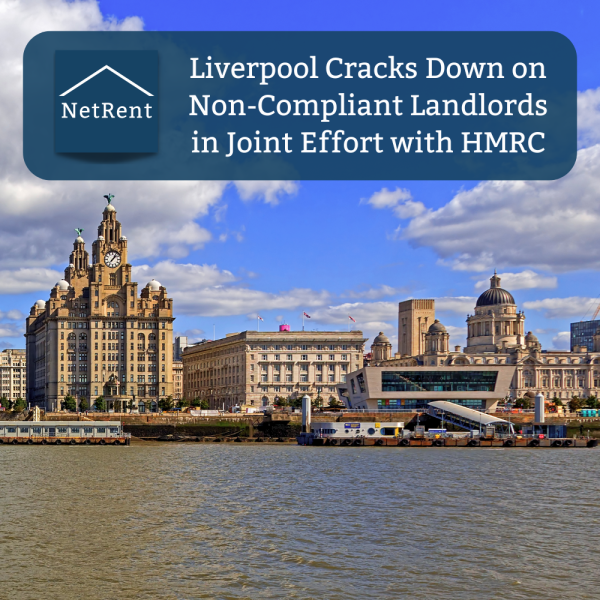
Liverpool City Council, in collaboration with HM Revenue and Customs (HMRC), has launched a rigorous campaign to address non-compliant landlords in the city. Louise Harford, the council’s interim director of housing, emphasized that landlords who avoid licensing schemes are often implicated in broader criminal activities. This joint effort aims to improve housing standards and tackle associated illegal behaviours.
A Broader Pattern of Non-Compliance
The selective licensing scheme in Liverpool targets private rented properties in specific areas to combat poor conditions and raise standards. “Unlicensed landlords are considered non-compliant and not having a licence is a criminal offence,” explained Harford. She added, “Experience and intelligence tells us that patterns of non-compliance in one area means there is a high chance of other non-compliance in other areas, whether that’s with trading standards matters, tax, or other evasive behaviour which all too often, is linked to private rented properties.”
To address this issue, Liverpool’s enforcement team is working closely with key partner agencies including Merseyside Police, Merseyside Fire and Rescue Service, HMRC, and the Home Office. This partnership has proven effective in sharing intelligence and combating criminal activities disguised as private rental operations.
Enforcement and Impact
Harford highlighted a recent success where collaboration with Merseyside Police led to the dismantling of a cannabis cultivation operation masked as a private rental property. “It’s not just unlicensed landlords who are falling foul of the law here; many licensed properties are being used for criminal gains such as drugs, brothels, and people trafficking too,” she noted. The enforcement team focuses on both unlicensed landlords and those who, despite holding licenses, fail to comply with their conditions, particularly regarding regular property checks.
In the six months since the initiative began, Harford reported positive impacts from joint operations and intelligence sharing. “Our job now is to continue to grow our network, refine our processes, and enhance our scope of enforcement to continue to disrupt rogue and criminal landlords, improving life for residents and tackling the wicked issues that make residents feel unsafe in their neighbourhoods,” she stated.
A Controversial Council Takes Action
Liverpool City Council’s firm stance on landlord compliance comes despite its own recent controversies. Following a government intervention in December 2020, after the arrest of several individuals linked to the council, commissioners were appointed to oversee its operations. Only last month did these commissioners return control back to the council, though a ‘statutory improvement board’ remains in place to provide oversight, advice, and challenge until March 2025.
This collaborative effort between Liverpool City Council and HMRC aims not only to improve the quality of housing but also to enhance safety and trust in neighbourhoods across the city. As the council continues to address its own challenges, its focus on tackling rogue landlords remains unwavering.