

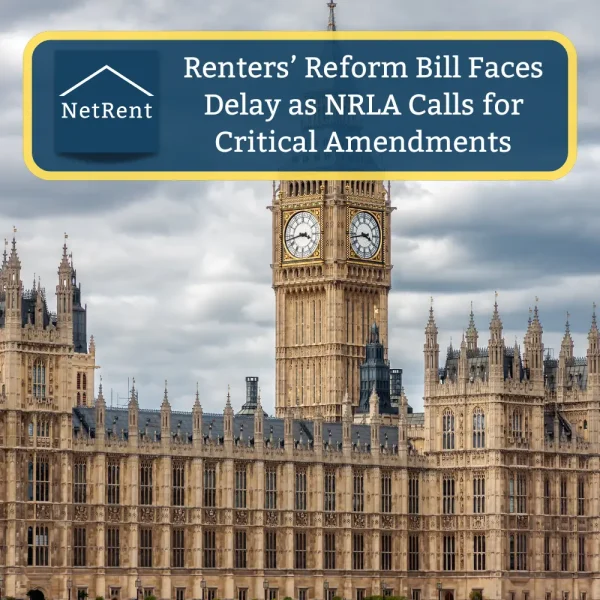
The Renters’ Reform Bill is increasingly unlikely to receive Royal Assent before Parliament’s summer recess, with the National Residential Landlords Association (NRLA) ramping up efforts to brief members of the House of Lords ahead of a key phase in the legislative process.
The Bill is scheduled for Report Stage in the House of Lords across three sittings between 1st and 15th July — the final session just seven days before Parliament rises on 22nd July. This stage is crucial, as it represents one of the last opportunities for peers to debate and amend the legislation before it proceeds toward final approval.
Originating from the National Residential Landlords Association, the latest intervention highlights significant concerns with the Bill’s current form. The NRLA, alongside legal experts and housing professionals, is lobbying for urgent revisions to avoid what it warns could be “unworkable” outcomes.
“We are leading the call for vital amendments to ensure the final legislation strikes a fair balance between protecting tenants and maintaining a viable, functional private rented sector,” a spokesperson for the association said.
What Happens Next?
At Report Stage, peers will re-examine the Bill line by line and vote on proposed amendments. Though less exhaustive than Committee Stage, this phase plays a pivotal role in refining legislation. With limited parliamentary time remaining before the summer break, the Bill is now highly unlikely to receive Royal Assent before September.
The start date for the reforms—formally known as the “commencement date”—has yet to be announced. However, ministers have previously stated that implementation would not occur earlier than two months after Royal Assent. Based on current timelines, this would mean the changes are unlikely to come into force before November, and potentially not until early 2026.
In a recent response to Shadow Housing Minister Kevin Hollinrake, Housing Minister Matthew Pennycook confirmed the new tenancy system would apply universally upon commencement. All existing tenancies would become periodic, and new tenancies would immediately fall under the reformed rules.
While some changes, such as the move to periodic tenancies, may be immediate, others—including the new Decent Homes Standard and the national landlord database—will require secondary legislation. The NRLA is calling for a minimum six-month buffer between the passing of such legislation and its enforcement, giving landlords adequate time to prepare.
NRLA’s Key Concerns Ahead of Report Stage
The NRLA has identified five critical areas requiring clarification or amendment:
1. Court “Readiness”
The Government has yet to define when the court system will be prepared to manage the influx of possession cases following the abolition of Section 21. Current Ministry of Justice data indicates it takes over 32 weeks on average for landlords to regain possession—a far cry from the Government’s target of eight weeks. The NRLA is demanding a clear timeline and full disclosure of the Government’s Justice Impact Test.
2. Potential Tribunal Gridlock
The Bill permits tenants to challenge rent increases at the Property Tribunal, regardless of whether the increase is below market rate. The NRLA warns this could create a surge in appeals, overwhelming the tribunal. It is proposing a gatekeeping step: requiring tenants to verify market rates through the Valuation Office Agency before lodging an appeal.
3. Rent Arrears and Universal Credit
Under the Bill, landlords would be barred from evicting tenants for rent arrears caused by delays in Universal Credit payments. The NRLA argues that landlords cannot legally verify whether tenants are on Universal Credit or if payments are delayed, placing them at unacceptable risk. It is calling for this clause to be removed.
4. Student Housing Disparity
While the Bill provides possession grounds for larger student HMOs, it excludes one- and two-bedroom student properties, which make up around a third of the student rental market. The NRLA is pushing for this provision to be extended to all student lets, warning that landlords may withdraw from this market segment without such assurance.
5. Accountability and Review
The association has voiced concerns that the scale of reform is not being matched by adequate monitoring mechanisms. It is backing amendments from Baroness Thornhill that would require formal reviews of the system’s impact on tenants, landlords, and the court system within set timeframes post-implementation.
“The Bill will fundamentally reshape how the private rented sector operates. Peers have a vital opportunity to correct oversights before this legislation becomes law,” the NRLA added.
As the Report Stage approaches, the NRLA has reaffirmed its commitment to working with legislators to ensure the Renters’ Reform Bill delivers a fair, workable framework for all stakeholders in the rental market. Whether the Government acts on these recommendations remains to be seen—but with time running short before recess, the pressure is mounting.