

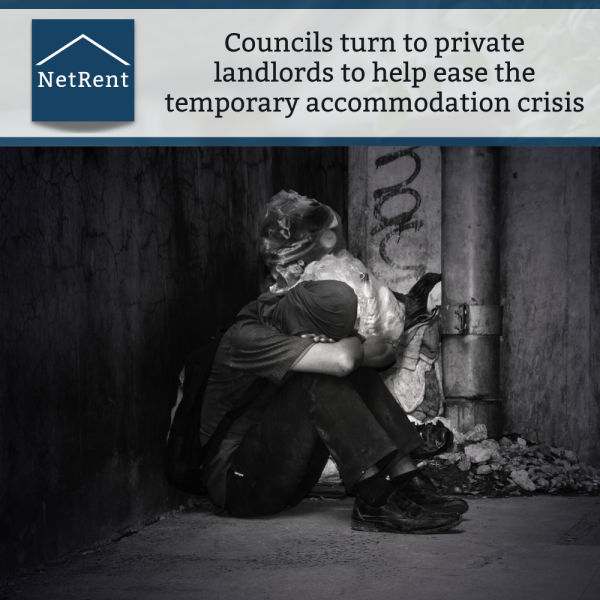
Local authorities across the UK are increasingly appealing directly to private landlords for help as they struggle with the spiralling cost and scale of temporary accommodation for people who are homeless or at risk of homelessness. Faced with soaring bills for emergency and interim housing, many councils are offering to partner with landlords — often on long leases, with guaranteed rent and management services — in order to house vulnerable households more stably and reduce reliance on expensive bed-and-breakfasts and other emergency solutions.
The problem
The pressure on councils has reached critical proportions. For many authorities the cost of putting people into temporary accommodation (TA) is no longer sustainable. With demand rising — driven by welfare pressures, high rents, supply shortages in social housing, and the aftermath of pandemic and cost-of-living shocks — councils are being squeezed from all sides.
Some are reporting that the cost of B&Bs or nightly paid hotels for homeless households is running into hundreds of thousands of pounds per month, while outcomes for households stuck in these environments are poor: long stays, frequent moves, instability and disruption to schooling, employment, health and support services.
Meanwhile, the private rented sector (PRS) offers potential additional stock and quicker access to housing than building new social homes or expanding council stock. Councils are therefore looking to landlords as part of the solution: leasing or renting privately-owned homes and placing households needing help.
What the incentive looks like for landlords
Many councils are putting forward attractive deals to private sector landlords in order to secure this stock. Common features include:
-
Guaranteed rent: The council takes on the risk of voids or non-payment by guaranteeing a monthly payment to the landlord, even if the tenant fails to pay.
-
Long-term leases: Instead of short moving contracts, landlords may be asked to lease their property to the council for a period such as 3-5 years (or even longer) so the council can use it to house households in need.
-
Property management and support: The council may take over management, repairs, utilities, council tax, tenant screening, and act as landlord, relieving the private landlord of day-to-day responsibilities.
-
Up-front incentives or grants: Landlords may be offered grants or loans to bring properties up to required standards, to raise energy performance, or to refurbish empty homes, making participation easier.
-
Support for high-risk tenants: Tenants coming via homelessness or risk routes may be supported by the council or a partner support agency, helping tenancy sustainment and reducing risk to landlords.
These packages aim to lower the barriers that prevent many private landlords from working with local authorities to house households who might otherwise be considered “higher risk” (those on benefits, with support needs, previous homelessness, etc).
English example
One local authority recently announced that it was seeking private landlord help because keeping people in expensive B&B accommodation had become financially unsustainable. The council offered to match willing landlords with tenants, and provided financial help towards deposits and rent in advance, specialist advice on tenancy matters and a named council contact to support the letting. In that case the council estimated around 100 people were in B&Bs at a cost of many hundreds of thousands of pounds per year. (Case courtesy of one council’s public appeal.)
Another English council launched a Private Sector Leasing (PSL) scheme: landlords lease to the council for 3-5 years; during that time the council pays a guaranteed rent, covers repairs, utilities, council tax; the landlord hands back the property in similar condition at end of the term. That scheme was explicitly designed to reduce the council’s reliance on costlier hotel-style TA.
Scotland example
The issue is national, not just confined to England. In Scotland, a coalition of homelessness and housing-sector experts (the “Everyone Home Collective”) called on the Scottish Government to work more proactively with the private rented sector, asserting that the PRS could play a far greater role in ending homelessness — so long as barriers could be removed. They recommended “incentives for landlords … with the aim of improving PRS access, quality and affordability” for lower-income households. In other words: councils and the Scottish Government recognising that private landlords need to be part of the solution.
While many of the incentives or detailed landlord-offer models are less widely published in Scotland, the recognition is clear: to avert growing volumes in temporary or interim housing, local authorities must tap more private sector rented stock.
Wales example
Wales provides a clear example of a defined scheme designed to harness private landlords in the homelessness/temporary-housing challenge. The Welsh Government’s “PRS Leasing Scheme” invites private landlords to lease their homes to local authorities (for between 5 and up to 20 years) in return for guaranteed rental income and (in many cases) improvements or grants to bring the property up to standard. The leased properties are then used to house people who are homeless or threatened with homelessness.
In detail: landlords leasing their property may receive rent at the relevant Local Housing Allowance (LHA) level (less a management fee), they may be eligible for a grant of up to £5,000 to bring the property to an agreed standard or to raise its energy performance, and even up to £25,000 for long-term empty homes. The local authority takes responsibility for full property management and tenant support. This clearly signals that the Welsh Government and local councils view the private sector as an active partner in meeting homelessness duties.
Why this matters
-
Financial pressure on councils: With TA costs so high, councils cannot continue business as usual. Bringing private rented homes into the mix is financially sensible compared to hotel/B&B stays.
-
Better outcomes for households: Using private homes for homelessness solutions offers more stability, community integration, and better prospects than indefinite stays in emergency accommodation.
-
New opportunities for landlords: Landlords who might otherwise avoid tenants with more complex needs or who are on benefits, may now be offered arrangements that reduce their risk and management burden.
-
National significance: The fact that this trend is visible in England, Scotland and Wales shows a UK-wide pressure on temporary accommodation, homelessness prevention and PRS supply. It signals policymakers recognise that private rented homes cannot be excluded from the housing solution if homelessness is to be tackled effectively.
Key challenges and caveats
-
Landlord take-up: Even with incentives, many landlords remain wary of letting to households with support needs, or worried about bureaucracy, voids, property condition risk or regulatory changes.
-
Quality and standards: Properties must meet safety/fitness standards; the council must ensure that leased homes are decent, safe and sustainable.
-
Tenancy sustainment: Simply placing someone into a home isn’t enough — supporting tenants (especially those from homelessness backgrounds) to sustain their tenancy matters. Without it, risk to landlords and councils remains.
-
Long-term fix vs. stop-gap: While leasing PRS homes helps relieve immediate pressure, the root causes — shortage of affordable/social housing, rising rents vs benefits, welfare/local housing allowance (LHA) gaps — still need addressing.
-
Market distortion: Paying large incentives or guaranteeing rents may distort the local rental market, or mean councils are in competition with private renters. That needs careful oversight.
Conclusion
Local authorities across all parts of the UK are now proactively seeking partnerships with private landlords to ease the burden of temporary accommodation and to provide more stable homes for people who are homeless or at risk. The incentives and support being offered vary, but the message is clear: private landlords are being asked to play a bigger role, and many councils are prepared to offer guarantees, management services, and upfront support to make this happen.
In England we see appeals made by councils to landlords with offers of deposit funding, guaranteed rent and full support. In Scotland the call is clear for the PRS to play a greater role, with recommendations for landlord incentives. In Wales there is already a formal leasing scheme with defined terms and grants to landlords.
For landlords, this could open up new opportunities — steady income, fewer voids, less management burden — but it remains crucial to understand the terms, the obligations, the tenant profiles and the risks involved. For councils, while these partnerships provide much-needed relief, they must be paired with tenancy sustainment support and longer-term housing supply strategies.
In short: as the temporary accommodation crisis deepens, private landlords and local authorities are increasingly becoming partners in the solution — but the success of these partnerships depends on good deals, good properties, landlord confidence, and long-term planning.