

Contact details:
Telephone: 01352 721300
Email: support@netrent.co.ukDisclaimer: The following article is provided by NetRent and does not constitute legal advice. The content represents our understanding of rental property law as at the date of publication.
1. Background: Why Awaab’s Law Exists
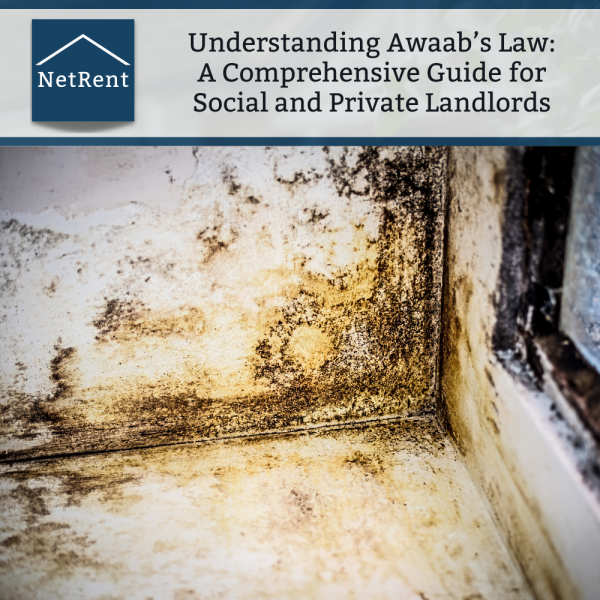
Awaab’s Law is named after two-year-old Awaab Ishak, who tragically died in December 2020 due to respiratory failure caused by prolonged exposure to black mould in his family’s social rented home in Rochdale. The case exposed systemic failures in how social landlords responded to complaints about damp and mould, and it prompted nationwide calls for reform.
In response, the UK Government passed the Social Housing (Regulation) Act 2023, which laid the foundation for Awaab’s Law. This law creates new, legally binding requirements for social landlords to respond to and resolve serious hazards—starting with damp and mould—within strict time limits.
The law represents a turning point in housing standards, moving from reactive, discretionary repairs toward mandatory, time-bound duties to protect tenants’ health and safety.
2. What Awaab’s Law Covers
Awaab’s Law is being introduced in phases to ensure proper implementation and compliance across the housing sector.
-
Phase 1 (from 27 October 2025) applies to social landlords in England, including local authorities and registered housing providers. It covers emergency hazards and significant damp and mould issues.
-
Phase 2 (expected 2026) will expand to include other major hazards such as excess cold, fire risks, and electrical safety.
-
Phase 3 (expected 2027) will include nearly all hazards under the Housing Health and Safety Rating System (HHSRS), except overcrowding.
-
Future reforms are expected to extend similar duties to the private rented sector, through forthcoming legislation such as the Renters’ Rights Bill.
Key Definitions
-
Emergency Hazard – A hazard presenting an imminent and serious risk to health or safety, requiring immediate investigation (within 24 hours).
-
Significant Damp and Mould Hazard – Damp or mould conditions posing a significant health risk, requiring investigation within 10 working days and prompt remedial action.
These duties apply when hazards arise from the building’s condition, structure, or maintenance—not solely from tenant behaviour or lifestyle factors.
3. Key Legal Duties for Social Landlords
From 27 October 2025, social landlords must comply with the following mandatory requirements under Awaab’s Law:
| Duty | Legal Timeframe |
|---|---|
| Investigate emergency hazards | Within 24 hours of becoming aware |
| Investigate significant damp and mould hazards | Within 10 working days |
| Provide written findings to tenants | Within 3 working days after investigation |
| Begin remedial work on significant hazards | Within 5 working days of completing investigation (and no later than 12 weeks if works cannot begin immediately) |
| Provide alternative accommodation if required | If the hazard cannot be remedied in time, landlords must offer safe, suitable accommodation at their expense |
Landlords must also consider tenant vulnerability—such as young children, elderly residents, or those with medical conditions—when assessing hazards. The presence of vulnerable occupants may shorten acceptable timeframes for action.
Failure to comply with these time limits can lead to enforcement action, regulatory penalties, and tenant compensation claims.
4. Implications for Social Landlords
The introduction of Awaab’s Law imposes new operational, compliance, and governance obligations on social landlords.
A. Policy and Process Overhaul
Landlords must overhaul their internal systems to ensure they can:
-
Rapidly receive and categorise hazard reports.
-
Investigate and document findings within the required timeframes.
-
Communicate effectively with tenants and regulators.
-
Arrange temporary accommodation when necessary.
This requires updated repairs policies, comprehensive staff training, and digital tracking systems to log every step of the investigation and repair process.
B. Asset and Maintenance Strategy
Awaab’s Law encourages preventive maintenance over reactive repairs. Social landlords must identify at-risk housing stock—older buildings, poorly ventilated flats, and homes with historic damp or condensation problems—and prioritise upgrades.
Investing in improved ventilation, insulation, and heating systems will reduce both future complaints and compliance risks.
C. Governance and Legal Risk
Landlord boards and senior management must actively monitor compliance metrics. Failure to meet timeframes could lead to:
-
Breach of contract claims from tenants.
-
Regulatory enforcement by the Regulator of Social Housing.
-
Significant reputational harm.
Maintaining comprehensive evidence—dates of reports, investigations, actions taken, and tenant communications—is crucial for proving compliance and defending against complaints or legal claims.
D. Tenant Engagement and Communication
Under Awaab’s Law, communication is not optional. Landlords must:
-
Provide clear written updates to tenants about investigations and repairs.
-
Offer accessible information in plain language or alternative formats when necessary.
-
Educate tenants on how to report damp and mould issues promptly and safely.
Building trust through proactive communication will help prevent disputes and ensure tenants understand their responsibilities too.
5. Implications for Private Landlords
While Awaab’s Law initially applies only to social landlords, it signals a clear direction for the private rented sector.
Private landlords should anticipate that similar time-bound duties will soon apply to them. In practice, they are already subject to the Homes (Fitness for Human Habitation) Act 2018, which requires rented properties to be free from serious hazards.
Best practice for private landlords includes:
-
Establishing clear reporting channels for tenants.
-
Investigating damp and mould promptly.
-
Keeping records of inspections and repairs.
-
Upgrading ventilation and insulation systems to prevent moisture build-up.
Adopting Awaab’s Law standards early can reduce disputes, protect tenants, and demonstrate a landlord’s commitment to providing safe housing.
6. Practical Checklist for Landlords
To prepare for Awaab’s Law, landlords—both social and private—should act now:
-
Conduct a comprehensive audit of housing stock for damp and mould risk.
-
Review and update repairs and maintenance policies.
-
Ensure staff and contractors are trained on new response deadlines.
-
Implement digital reporting systems to log and monitor hazards.
-
Develop emergency response plans for high-risk cases.
-
Prepare tenant communication templates for updates and advice.
-
Budget for increased maintenance and alternative accommodation costs.
-
Invest in preventive measures—such as improved ventilation, insulation, and heating efficiency.
-
Regularly review compliance metrics to ensure timeframes are met.
Being proactive now will not only ensure compliance but also prevent costly remediation, reputational harm, and legal action later.
7. Risks of Non-Compliance
Failing to meet the duties imposed by Awaab’s Law may lead to:
-
Tenant compensation claims for breach of statutory obligations.
-
Enforcement by the Regulator of Social Housing, including potential sanctions.
-
Intervention by the Housing Ombudsman for unresolved complaints.
-
Reputational damage from media exposure or public scrutiny.
-
Increased costs due to emergency works or providing temporary accommodation.
Beyond legal risk, inaction undermines tenant confidence and trust—something that many landlords are now working hard to rebuild.
8. Key Challenges Ahead
While the objectives of Awaab’s Law are clear, compliance presents several challenges:
-
Determining the cause of damp and mould can be complex. Landlords must avoid wrongly attributing issues to tenant behaviour.
-
Resource limitations—many housing providers face capacity and funding pressures to meet short repair deadlines.
-
Data and governance gaps—landlords need better systems to monitor reports, repairs, and outcomes.
-
Phased expansion—the scope of Awaab’s Law will widen over the next two years, requiring sustained investment and planning.
Forward-thinking landlords are already building resilience by investing in technology, training, and better communication systems.
9. Summary and Takeaways
Awaab’s Law is a watershed moment for housing standards in England. It establishes:
-
Clear, enforceable timeframes for responding to serious housing hazards.
-
A proactive rather than reactive model of property maintenance.
-
Stronger tenant rights and greater accountability for landlords.
For social landlords, immediate compliance is non-negotiable. For private landlords, this is the time to prepare—because similar obligations are on the horizon.
Awaab’s Law is ultimately about restoring dignity, safety, and trust in rented housing. Compliance is not just a legal duty—it’s a moral one.
10. Final Thoughts
The introduction of Awaab’s Law represents a cultural shift in housing management. It demands transparency, speed, and responsibility from every landlord.
By embracing the spirit of the law—not just its letter—landlords can ensure that tragedies like Awaab Ishak’s never happen again.
Early compliance, strong governance, and tenant-focused service delivery will define the next era of housing standards in the UK.
If you would like guidance on implementing these changes, auditing your portfolio for compliance risks, or understanding your future obligations, NetRent can help.
Contact Details:
Telephone: 01352 721300
Email: support@netrent.co.uk
Disclaimer:
This article is provided for general information only and does not constitute legal advice. You should seek independent legal or professional advice before acting on any of the information provided.