

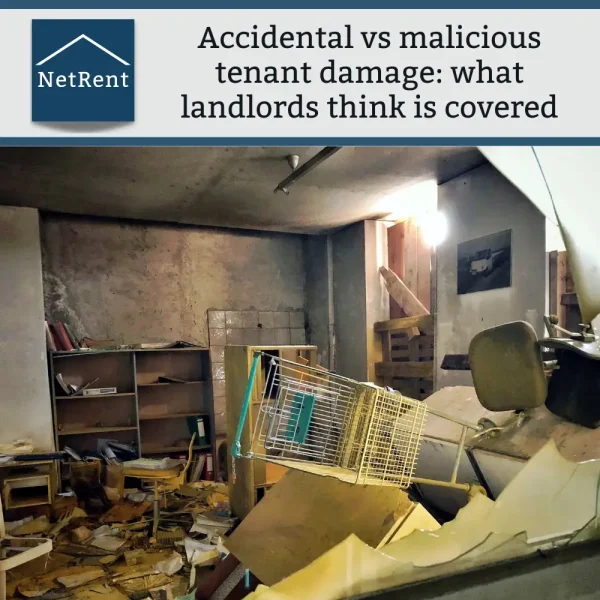
A practical guide to one of the most misunderstood areas of landlord insurance
Tenant damage is where expectations and reality often collide
Many landlords only think about tenant damage cover after something has already happened:
-
a smashed hob
-
a ruined carpet
-
a hole in a door
-
water damage from misuse
-
deliberate damage after a dispute
At that moment the natural question is:
“Is this covered?”
This is one of the most common areas of misunderstanding in landlord insurance because terms like “accidental damage” and “malicious damage” sound straightforward — but policies treat them differently, and cover varies.
This article explains the difference in plain English and shows what landlords should check before renewal or when comparing quotes.
1) What “accidental damage” generally means (in simple terms)
Accidental damage typically refers to sudden, unintended physical damage caused by a specific event.
Think: something that happens in a moment, unintentionally.
Examples landlords often associate with accidental damage:
-
a tenant drops something and cracks a sink
-
a door is damaged accidentally during normal use
-
a spill permanently stains flooring
Whether these examples are covered depends on the policy wording and the circumstances — but as a general concept, accidental damage is about unintentional damage.
2) What “malicious damage” generally means
Malicious damage usually involves deliberate or intentional damage.
This can include:
-
damage caused in anger
-
vandalism within the property
-
deliberate destruction of fixtures or fittings
This is often the scenario landlords fear most — because the cost and disruption can be significant.
But this is also where landlords are most likely to assume cover exists when it may not, or may only apply in certain ways.
3) The big misunderstanding: “Tenant damage is tenant damage”
It isn’t.
Some policies:
-
include accidental damage but not malicious damage
-
offer tenant damage only as an optional add-on
-
apply different terms depending on tenant type or occupancy
-
contain exclusions that catch landlords out
This is why two quotes that look identical on price can behave very differently after a tenancy ends badly.
4) Five things landlords should check (before they need it)
If you want tenant damage cover, these are the five questions that usually matter:
1) Is tenant damage included at all — or is it optional?
Don’t assume it’s standard.
2) Does the cover differentiate between accidental and malicious?
Many policies do, and it affects outcomes.
3) What property elements are included?
Some damage types may relate to buildings, some to landlord contents/fixtures.
4) What evidence will be needed?
For example, documentation that the property was in good order at the start, and what changed.
5) What excess applies?
Tenant damage claims can be heavily influenced by the excess level.
A tenant damage “package” that looks good can be less useful if excesses and limits are set in a way that makes claiming uneconomical for common losses.
5) The quiet risk: policy schedule accuracy
Tenant damage cover is also sensitive to whether your documentation matches reality.
If the policy schedule describes the let incorrectly (use, occupancy, tenant type), it can create friction when you need the cover.
This is one reason we repeatedly recommend a simple schedule sanity-check before renewal.
How NetRent & Clear can help
We can review your existing documents and highlight:
-
whether accidental and/or malicious tenant damage is included
-
whether it’s optional and how it’s structured
-
what assumptions your policy appears to be based on
-
where misunderstandings commonly occur
If you choose to arrange cover through our partner broker, Clear, they can arrange the policy and you’ll have access to Clear’s in-house claims support for policies arranged through Clear.
Quote Comparison (“Give us a try”) — tenant damage clarity
If you’re insured elsewhere or approaching renewal:
Request a landlord insurance quotation and comparison
We’ll:
-
compare how each option treats accidental vs malicious tenant damage
-
explain what’s included and what isn’t (in plain English)
-
highlight any excess/limit issues that could affect usefulness
This is one of the easiest ways to ensure you’re not buying a policy that only looks good until you need it.
Regulatory note
NetRent Insurance Services is a trading name of NetRent Ltd. NetRent Ltd is an Appointed Representative of Clear Insurance Management Ltd, which is authorised and regulated by the Financial Conduct Authority.
This article is general information only and does not constitute advice.
Contact us
Telephone: 01352 721300
Email: insurance@netrent.co.uk
Want a quote comparison focused on tenant damage cover?
Call or email us with your renewal date and a copy of your policy schedule.