

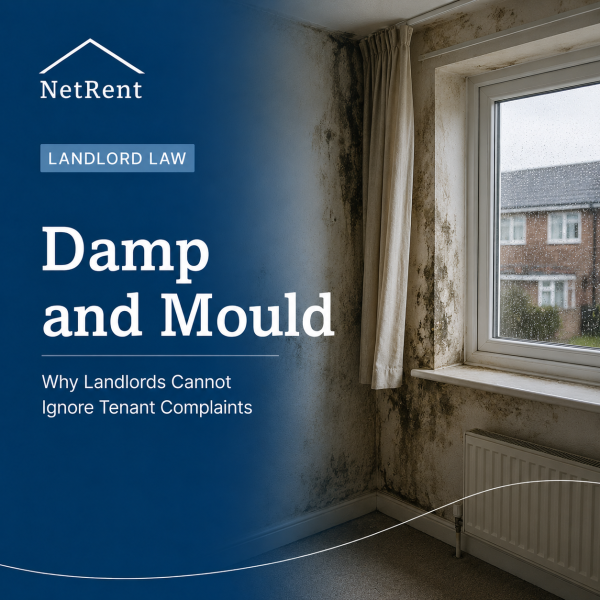
Damp and mould are among the most common problems in rented homes.
They are also among the most serious.
For landlords, damp and mould should never be treated as a minor inconvenience or simply blamed on the way a tenant lives. The cause may be condensation, but it may also be linked to leaks, poor ventilation, structural defects, inadequate heating, defective gutters, rising damp, penetrating damp or cold bridging.
The key message is simple: when a tenant reports damp or mould, landlords should take it seriously, investigate properly and keep clear records.
Why damp and mould matters
Damp and mould can affect both the property and the people living in it.
It can damage walls, ceilings, floors, furniture, clothing and personal belongings. More importantly, it can affect health, especially for children, older people, people with asthma, people with allergies, and tenants with weakened immune systems or long-term health conditions.
That means damp and mould should not be dismissed as cosmetic.
A small patch of mould may be an early warning sign. If the cause is not investigated, the problem may spread and become more difficult and expensive to resolve.
Different types of damp
Not all damp is the same.
The main types landlords may encounter include:
- condensation;
- penetrating damp;
- rising damp;
- leaks;
- plumbing-related moisture;
- damp caused by poor ventilation;
- damp caused by inadequate heating;
- damp linked to insulation problems;
- damp from defective gutters, roofs or external walls.
Understanding the type of damp matters because the solution depends on the cause.
Cleaning mould from a wall may deal with the visible problem, but it will not solve the underlying issue if the cause is a leak, blocked gutter or ventilation failure.
Do not assume it is tenant lifestyle
One of the most common mistakes is blaming the tenant too quickly.
Tenant behaviour can sometimes contribute to condensation. For example, drying clothes indoors without ventilation, not using extractor fans, blocking air vents or not heating the property may make condensation worse.
But landlords should be careful. There may be property-related causes, including:
- poor insulation;
- defective ventilation;
- single glazing;
- cold external walls;
- leaks;
- faulty extractor fans;
- blocked air bricks;
- roof defects;
- gutter problems;
- inadequate heating;
- poorly designed layouts.
A landlord should investigate before reaching conclusions.
Responding to complaints
When a tenant reports damp or mould, landlords should respond promptly and professionally.
A good response should include:
- acknowledging the report;
- asking for photographs if useful;
- arranging an inspection where appropriate;
- checking whether there are any health concerns;
- identifying whether urgent action is needed;
- instructing a competent contractor if required;
- keeping the tenant updated;
- recording all communication.
The landlord should avoid dismissive responses such as “open a window” or “that is just condensation” without checking the facts.
Inspection and evidence
A proper inspection can help identify the cause.
Landlords or agents should look for:
- location of mould patches;
- external wall condition;
- roof or gutter defects;
- signs of leaks;
- water staining;
- condensation patterns;
- ventilation;
- extractor fans;
- heating operation;
- window condition;
- blocked air bricks;
- plumbing leaks;
- tenant reports of when the issue occurs.
Photographs should be dated and stored. Notes should be factual.
If a specialist report is needed, landlords should keep a copy with the property records.
Repairs and practical action
The right action depends on the cause.
Possible solutions may include:
- repairing leaks;
- fixing gutters or roof defects;
- improving ventilation;
- repairing or installing extractor fans;
- improving heating;
- addressing insulation or cold bridging;
- treating affected surfaces;
- replacing damaged plaster;
- cleaning mould safely;
- repairing defective windows or doors;
- resolving plumbing faults.
Landlords should avoid relying only on surface treatment if the underlying cause remains.
Painting over mould without dealing with damp is unlikely to be a lasting solution.
Tenant guidance
Tenants can help reduce condensation and moisture, but guidance should be practical and respectful.
Landlords may provide advice about:
- using extractor fans;
- keeping trickle vents open;
- ventilating after bathing or cooking;
- reporting leaks promptly;
- avoiding blocking vents;
- keeping furniture slightly away from cold external walls;
- heating the property adequately where possible.
However, guidance should not be used as a substitute for repairs.
If the property has poor ventilation, faulty heating or structural damp, landlord action may still be needed.
Vulnerable tenants
Some tenants may be more affected by damp and mould than others.
Landlords should take extra care where the household includes:
- young children;
- older people;
- pregnant tenants;
- people with asthma;
- people with respiratory conditions;
- disabled tenants;
- tenants with weakened immune systems.
Where health concerns are raised, landlords should treat the issue with particular urgency.
Record-keeping matters
Damp and mould disputes often turn on evidence.
Landlords should keep records of:
- the tenant’s first report;
- photographs supplied;
- inspection dates;
- inspection notes;
- contractor reports;
- works ordered;
- works completed;
- tenant updates;
- follow-up inspections;
- any tenant guidance provided;
- recurring reports;
- reasons for any delay.
Good records help show that the landlord took the issue seriously and acted reasonably.
Poor records can make a landlord appear dismissive, even where action was taken.
Recurring problems
If damp or mould keeps returning, landlords should not treat each report as a separate minor issue.
Recurring mould suggests the underlying cause has not been resolved.
Landlords should review:
- whether previous works were effective;
- whether ventilation is adequate;
- whether heating is sufficient;
- whether there are hidden leaks;
- whether external defects remain;
- whether the same room or wall is repeatedly affected;
- whether specialist advice is needed.
Repeated cleaning without further investigation is unlikely to be enough.
Why this matters under the Renters’ Rights Act
The Renters’ Rights Act is part of a wider move towards stronger landlord accountability and better property standards.
Future reforms, including the extension of Awaab’s Law principles to the private rented sector, are expected to increase the focus on response times, hazards and written records.
This makes damp and mould a key issue for landlords.
It is likely to matter in:
- tenant complaints;
- local authority investigations;
- future Ombudsman processes;
- property condition disputes;
- claims about fitness for human habitation;
- future private rented sector database requirements.
Landlords should therefore treat damp and mould as a core safety and condition issue, not just a maintenance complaint.
Common landlord mistakes
1. Blaming the tenant without investigation
Tenant behaviour may be relevant, but the landlord should first check for property-related causes.
2. Cleaning mould but not fixing the cause
Surface cleaning may be temporary if ventilation, leaks or cold bridging remain unresolved.
3. Ignoring small patches
Small areas of mould can grow quickly if the cause is not dealt with.
4. Poor communication
Tenants should be kept updated, especially where works are delayed.
5. No follow-up
Landlords should check whether the problem has been resolved after work is completed.
6. Weak records
Without records, it can be difficult to prove what was reported and how the landlord responded.
7. Ignoring health concerns
Reports involving children, older tenants or respiratory conditions should be treated carefully.
Practical checklist for landlords
Landlords should:
- respond promptly to damp and mould reports;
- ask for photographs where useful;
- arrange inspections where needed;
- investigate the cause properly;
- check for leaks, ventilation and heating issues;
- avoid blaming tenant lifestyle too quickly;
- instruct competent contractors;
- keep dated photographs;
- record communication with tenants;
- provide practical guidance where appropriate;
- complete repairs promptly;
- follow up after works;
- review recurring problems;
- keep all records in the property compliance file.
The key takeaway
Damp and mould are not just cosmetic problems.
They can affect health, damage property and create serious disputes if not handled properly.
Landlords should investigate complaints, identify the cause, take appropriate action and keep clear records.
In the modern private rented sector, damp and mould complaints need a serious, evidence-based response.
NetRent does not provide legal advice. This article represents our understanding of rental property law at the time of writing.
Telephone: 01352 721300
Email: support@netrent.co.uk