

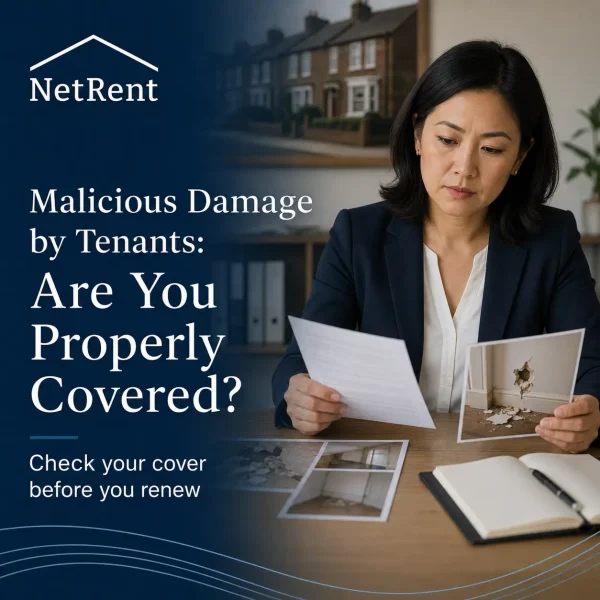
Malicious damage by tenants is one of the risks landlords often assume is covered.
That assumption can be dangerous.
Landlord insurance policies are not all the same. Some policies may include malicious damage by tenants. Some may restrict it. Some may exclude it. Some may apply limits, conditions or different excesses. Some may treat damage by tenants differently from accidental damage, theft, vandalism or damage caused by other people.
For landlords, the detail matters.
If a tenant deliberately damages a property, the landlord may face repair costs, loss of rent, void periods, cleaning, replacement items, legal issues and significant stress. If the insurance does not respond in the way the landlord expected, the financial impact can be severe.
That is why malicious damage cover should be checked before renewal, not after the damage has been discovered.
Malicious damage is not the same as wear and tear
Rental properties naturally suffer wear and tear over time.
Carpets become worn. Paintwork marks. Fixtures age. Appliances break down. Minor scuffs, scratches and general deterioration are part of letting property.
Malicious damage is different.
It involves deliberate damage. That might include smashed doors, broken windows, damaged kitchens, destroyed carpets, holes in walls, intentional flooding, vandalism inside the property or other purposeful damage caused by a tenant or someone connected to the tenancy.
The problem is that the boundary between wear and tear, accidental damage, neglect and malicious damage is not always simple.
That is why landlords should understand what their policy actually says.
Do not assume tenant damage is automatically covered
Many landlords think that because they have landlord insurance, damage caused by tenants must be covered.
That is not always the case.
A policy may cover certain types of damage but not others. It may include accidental damage but not malicious damage by tenants. It may cover malicious damage but apply limits. It may require evidence. It may exclude damage in certain circumstances. It may depend on how the tenancy was arranged, who was occupying the property, or whether the landlord complied with policy conditions.
The wording matters.
So does the way the policy has been arranged.
If your broker has not specifically discussed malicious damage by tenants with you, it is worth asking why.
Tenant type can affect the insurance position
Tenant type is an important part of landlord insurance.
A property let to professional tenants, students, benefit-assisted tenants, company lets, supported living occupants, asylum seeker accommodation or other arrangements may be viewed differently by insurers.
The issue is not that one tenant type is automatically good or bad.
The issue is that the insurer needs accurate information.
If the tenant type has changed and the policy has not been updated, the landlord may not have cover that properly reflects the current risk. That can become particularly important where tenant-related damage is involved.
A good broker should ask about tenant type before insurance is quoted and again before renewal.
Evidence may be important
If a landlord needs to claim for malicious damage, evidence can matter.
The insurer may need to understand what happened, when it happened, who caused the damage, and whether the damage appears deliberate rather than accidental or gradual.
Good records can help.
Landlords should consider the importance of:
- clear inventories;
- check-in photographs;
- inspection reports;
- dated images of damage;
- contractor reports;
- police reports where appropriate;
- correspondence with the tenant or agent;
- check-out reports;
- evidence of rent arrears or tenancy issues where relevant.
This does not mean every claim will require the same evidence, but landlords should not underestimate the value of good records.
Insurance is easier to rely on when the landlord can show what the property was like before and after the damage.
The excess matters
Even where malicious damage is covered, landlords should check the excess.
A policy may have different excesses for different types of claim. A low premium may look attractive, but if the excess is much higher, the landlord needs to understand the practical impact.
If the excess is high and the damage is moderate, the landlord may end up paying a significant part of the cost themselves.
That may still be acceptable, but it should be a deliberate decision, not a surprise after the event.
Loss of rent should also be considered
Malicious damage can create more than repair costs.
If the property cannot be let while repairs are carried out, the landlord may also lose rental income.
That is why loss of rent cover should be reviewed alongside tenant damage cover.
A landlord should ask:
Is loss of rent included?
How much is covered?
For how long?
Does it apply in the circumstances that matter?
Would the cover be enough if the property was unavailable for a prolonged period?
For portfolio landlords, this can be especially important because rental income may support borrowing, maintenance and other ongoing property costs.
Cheap cover may not be enough
A cheap policy may seem attractive at renewal.
But if tenant-related damage is weakly covered, restricted or excluded, the saving may not be worth it.
Landlords should not compare policies only by premium. They should compare the cover that matters if something goes wrong.
Malicious damage by tenants is a good example of why.
Two policies may both be described as landlord insurance. One may provide useful protection for tenant-related damage. Another may offer much less. The headline premium will not always make that obvious.
The details need to be checked.
Your broker should be asking about this
If your broker understands landlord insurance, malicious damage by tenants should not be an afterthought.
They should ask relevant questions. They should understand the tenant type. They should explain whether cover is included, limited or excluded. They should help you understand whether the policy is suitable for your property or portfolio.
If the renewal simply arrives without that discussion, you may not know whether you are properly protected.
A renewal notice is not the same as a proper review.
Why NetRent and Clear can help
NetRent has worked with landlords for 23 years. We understand rental property and the practical risks landlords face.
Tenant-related damage is one of those risks.
That is why NetRent speaks to landlords directly, gathers the relevant information and asks the questions that matter before passing details to Clear’s dedicated NetRent insurance team.
Clear Insurance Management then use their specialist broking expertise to seek appropriate landlord insurance options.
Importantly, Clear do not simply roll landlord policies forward at renewal. They re-broke landlord insurance to help ensure landlords are getting the best available price and policy for their circumstances.
That kind of review is important when issues such as malicious damage, loss of rent, tenant type and excesses can make such a significant difference.
Do not wait until the damage is done
The worst time to discover that malicious damage is not properly covered is after the tenant has left and the damage has been found.
By then, the policy wording is already fixed. The excesses are already set. The exclusions already apply. The cover is either suitable or it is not.
That is why landlords should review this before renewal.
Ask whether malicious damage by tenants is included.
Ask whether limits apply.
Ask whether tenant type has been correctly disclosed.
Ask whether loss of rent is adequate.
Ask whether the excess is acceptable.
Ask whether the policy is still fit for purpose.
Contact NetRent before you renew
If your landlord insurance renewal is approaching, do not assume malicious damage by tenants is properly covered.
Send your renewal to NetRent before you commit.
Let us review what you have been offered. Let us ask the right landlord-specific questions. Let us see whether Clear’s dedicated NetRent team can provide a competitive alternative that properly reflects your property, tenant type and wider circumstances.
You may save money. You may improve your cover. You may avoid discovering a gap only after damage has been caused.
But most importantly, you will not be renewing on assumptions.
Call NetRent: 01352 721300
Email: insurance@netrent.co.uk
Before you renew, check whether malicious damage by tenants is properly covered. Send your landlord insurance renewal to NetRent.