

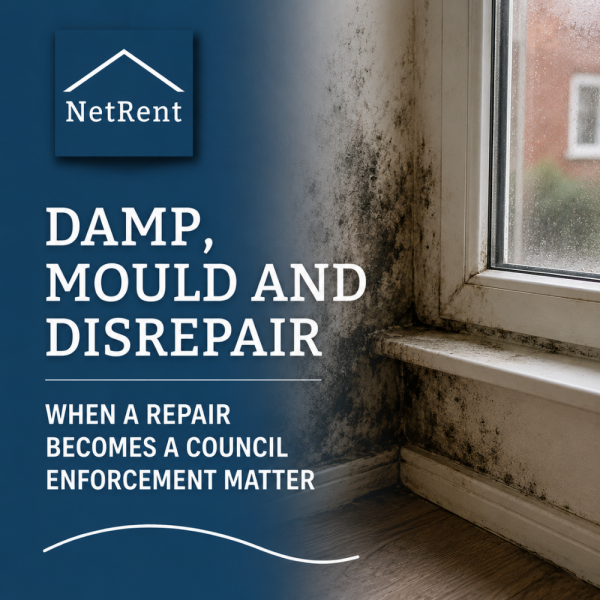
Damp and mould complaints should never be treated as routine decorating issues.
For landlords, the important question is not simply whether mould is visible. It is why it is happening, whether the property contains a serious hazard and what action is needed to remove the cause.
If problems are not investigated and dealt with properly, a tenant complaint can escalate into local authority involvement and formal enforcement.
Start with the cause, not the symptom
Mould can develop for different reasons.
Possible causes include:
- leaking roofs or gutters;
- defective plumbing;
- penetrating damp;
- rising damp;
- inadequate heating;
- poor ventilation;
- condensation;
- defective windows or external walls; and
- a combination of property and occupancy factors.
Simply wiping away mould, repainting a wall or telling a tenant to open windows may not resolve the underlying problem.
Landlords should investigate the cause properly.
Respond quickly to tenant reports
When a tenant reports damp, mould or serious disrepair, landlords should create a written record immediately.
Record:
- when the complaint was received;
- what the tenant reported;
- photographs or other evidence supplied;
- when an inspection was arranged;
- who carried out the inspection;
- what defects were identified;
- what remedial work was ordered; and
- when the work was completed.
Keeping the tenant informed is also important.
A long period of silence can make a repair problem appear to have been ignored even where contractors are being arranged behind the scenes.
When can the council become involved?
Tenants can contact their local authority if they believe their home contains serious hazards.
Councils can inspect privately rented properties using the Housing Health and Safety Rating System, usually known as HHSRS.
This assesses risks to occupants rather than simply asking whether a particular component of the building is defective.
Damp and mould can contribute to hazards affecting health, particularly where conditions are serious or occupants are especially vulnerable.
If a council identifies a significant hazard, it has a range of enforcement options.
What action can a council take?
The response depends on the seriousness and circumstances of the problem.
Possible action can include:
- requiring improvement work;
- serving formal notices;
- restricting the use of part or all of a property;
- carrying out emergency action in appropriate cases; and
- taking enforcement action where a landlord fails to comply.
The consequences can therefore be much more serious than the original cost of repairing a leak or improving ventilation.
Landlords should treat formal correspondence from a local authority as a priority.
Do not wait for an improvement notice
A common mistake is to assume that council involvement only becomes serious once a formal notice arrives.
By that stage, the landlord may already have lost an opportunity to resolve matters quickly and demonstrate good management.
Where a legitimate problem is identified, carrying out appropriate repairs promptly is normally preferable to allowing the matter to escalate.
Good records can also demonstrate that the landlord took the complaint seriously and acted reasonably.
What if the tenant refuses access?
Access problems do occur.
A landlord cannot simply force entry because repairs are required.
Instead, keep detailed evidence of attempts to arrange reasonable appointments.
This might include:
- emails;
- text messages;
- letters;
- proposed appointment dates; and
- contractor records showing unsuccessful visits.
Where a serious hazard exists and access continues to be refused, landlords may need specialist advice about the appropriate next step.
The important point is to demonstrate continued attempts to investigate and resolve the problem.
Awaab’s Law and private landlords
Landlords may have heard a great deal about Awaab’s Law, which introduces fixed response times for serious hazards in social housing.
It is important not to confuse the current social housing requirements with the position in the private rented sector.
The government intends to extend Awaab’s Law to privately rented homes, but the detailed requirements and implementation timetable for the PRS have not yet been finalised.
That does not mean private landlords can ignore damp and mould in the meantime.
Existing repairing obligations, housing standards and council enforcement powers continue to apply.
Prevention is better than enforcement
Landlords should regularly inspect for warning signs rather than waiting for a serious tenant complaint.
Check:
- roofs and gutters;
- external pointing and render;
- plumbing;
- extractor fans;
- window ventilation;
- heating systems;
- seals around baths and showers;
- signs of condensation; and
- previous areas of damp or mould.
Properties with recurring problems may need a more substantial solution than repeated cosmetic treatment.
How does the position differ elsewhere in the UK?
The enforcement system described above relates primarily to England.
Wales operates its own fitness-for-human-habitation requirements under the Renting Homes framework.
Scotland has its own Repairing Standard and separate enforcement arrangements.
Northern Ireland also has its own statutory fitness and housing standards.
Landlords with properties in different parts of the UK should therefore check the requirements applying in the relevant jurisdiction.
Treat damp and mould as a property-management issue
Damp and mould should not become a dispute about blame.
The sensible approach is to investigate, identify the cause, carry out necessary work and keep an accurate record of every stage.
The earlier a genuine problem is resolved, the less likely it is to become a serious health issue, a prolonged tenant dispute or a council enforcement matter.
NetRent’s Landlord Legal Updates will continue to explain important legal and regulatory developments affecting landlords, letting agents and tenants across the UK.
NetRent also supports landlords with landlord insurance, mortgages and property sales.
Telephone: 01352 721300
Email: support@netrent.co.uk
Important information
NetRent does not provide legal advice. The articles represent our understanding of rental property law and are for general information only.