

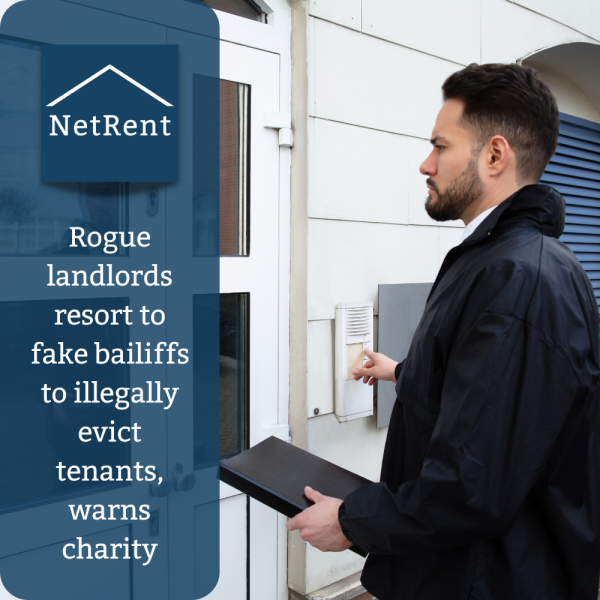
Safer Renting, a charity dedicated to protecting tenants, has raised the alarm over a disturbing trend where unscrupulous landlords are employing private security guards disguised as court bailiffs to unlawfully evict renters. According to Ben Reeve-Lewis, co-founder of the charity’s tenancy relations service in London, there has been a surge in cases this year where landlords resort to uniformed security guards, creating an illusion of a court-approved eviction.
In a shocking twist, Reeve-Lewis revealed that these fake bailiffs are equipped with stab vests, radios, handcuffs, and even vans sporting police-like logos. Such deceitful tactics have become increasingly prevalent, marking the first time in Reeve-Lewis’s 33-year experience in the private rented sector that he has witnessed this audacious ploy.
It is essential to note that only court-appointed bailiffs possess the legal authority to carry out evictions. Any other individuals employing force or changing locks are engaging in criminal activities.
Recognizing the gravity of the situation, the government recently introduced the Renters (Reform) Bill, aiming to grant both tenants and landlords new rights, including the prohibition of no-fault evictions.
The rise in illegal evictions and harassment can be attributed to soaring living costs, which erode renters’ incomes, and the scarcity of housing, allowing landlords to hike rents. Disturbingly, data compiled by Safer Renting, drawing from various sources like Citizens Advice, Shelter, and local authorities, reveals a concerning increase in the number of illegal eviction or harassment cases. In 2022 alone, over 8,000 instances were reported, compared to nearly 7,800 cases in 2021 and over 6,900 cases in 2020.
One recent case that exemplifies this dire situation involved a landlord in east London employing a private security firm to evict two families, including a woman and her autistic son. Despite possessing a tenancy agreement, the families were ordered to vacate, with the locks subsequently changed under the watchful eyes of two security personnel. Consequently, the affected families have been relocated to temporary accommodation, but the woman now faces challenges in ensuring her son can attend his special school due to the increased distance.
Reeve-Lewis emphasized the need for legal action to rectify such injustices and underscored the prevalence of such cases, stating, “These kinds of cases shock the general public, but we see it all the time.” John-Luke Bolton, co-producer of Safer Renting’s annual illegal eviction report, expressed deep concern over the lack of enforcement, highlighting the alarming fact that illegal evictions now occur every hour, every day.
Bolton further pointed out the troubling behaviour of authorities, with the police often favouring landlords or treating the matter as a mere civil dispute. Furthermore, local councils rarely take action, having suffered significant cuts to their tenancy-relations officer positions during times of austerity. Making matters worse, tenants face obstacles in pursuing civil action due to the unavailability of legal aid for eviction cases.
As the rental market resembles an untamed frontier, plagued by minimal enforcement, urgent measures must be taken to safeguard tenants from the exploitative tactics employed by rogue landlords.