

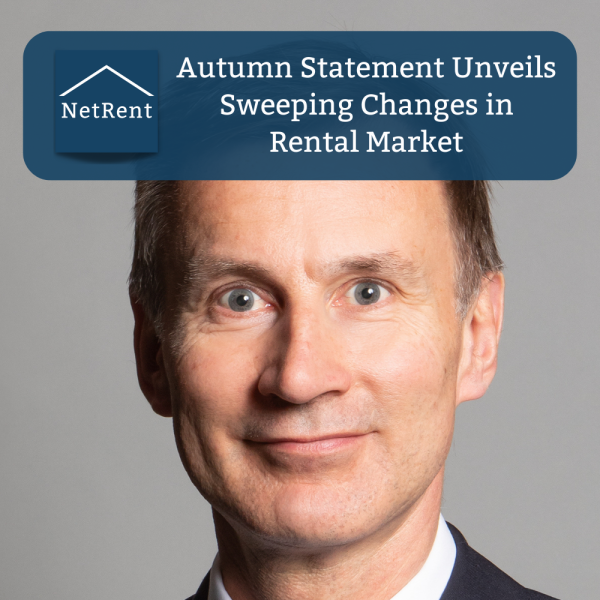
Chancellor Jeremy Hunt has unveiled a comprehensive Autumn Statement that promises significant changes impacting the rental market and broader property sector. In a bid to address housing concerns and stimulate economic growth, Hunt introduced a series of measures set to reshape the financial landscape for millions of households across the UK.
One of the headline announcements was the adjustment to the Local Housing Allowance (LHA), set to surge next year to the 30th percentile of local market rents. Responding to calls from various landlord and lettings agency groups, Hunt emphasized that this adjustment could potentially benefit around 1.6 million households presently renting in both private and social housing sectors. According to the Chancellor, this boost equates to approximately £800 per year for households receiving LHA.
Extending the government-backed 95% Mortgage Guarantee Scheme until June 2025 marks a significant move aimed at bolstering the housing market and facilitating easier access to property ownership for prospective buyers.
Proposed alterations to Permitted Development Rights were also part of the Chancellor’s announcement, with plans to allow the conversion of any house into two flats without altering its external appearance. This proposed change seeks to streamline property development and diversify housing options.
Moreover, households residing in proximity to new electricity infrastructure, such as pylons and sub-stations, are poised to receive relief in the form of up to £1,000 per year off their energy bills.
The statement further outlined the government’s intention to allow local authorities to recover the full costs of large-scale planning applications by 2024, promising a guaranteed date for a planning decision in return.
Among the numerous economic measures outlined in the statement, the extension of a 75% relief in business rates for the retail, hospitality, and leisure sectors until 2025 stood out as a move aimed at supporting these industries during their post-pandemic recovery.
Additionally, key financial changes set to take effect include a 2.0% reduction in Employee National Insurance, providing an average salary saving of £450 for 27 million employees starting from January 6, 2024. Furthermore, the abolition of Class 2 National Insurance payments for the self-employed, coupled with a reduction in Class 4 NI from 9.0% to 8.0% from April, is expected to save the average self-employed individual £192 and £150, respectively.
The Autumn Statement also promised a 6.7% increase in Universal Credit and other benefits from April, while ensuring the fulfilment of the Triple Lock in pension payments, set to rise by 8.5% in April.
Moreover, the statement projected a gradual decline in core inflation, aiming for a 2.8% rate in 2024 and targeting the official 2.0% rate by 2025. It also detailed freezes in alcohol duty until August 2024 and a 25% reduction in the business tax burden for large companies investing in the UK.
Additional funding initiatives were announced, including significant investments in green technology, pharmaceuticals, AI development, Freeports, and Investment Zones. The statement also emphasized reforms in long-term sickness benefits to encourage job-seeking and working from home.
Furthermore, pivotal social initiatives, such as an increase in the National Minimum Wage and funding to combat anti-Semitism in educational institutions, were highlighted as part of the comprehensive Autumn Statement presented by Chancellor Jeremy Hunt.