

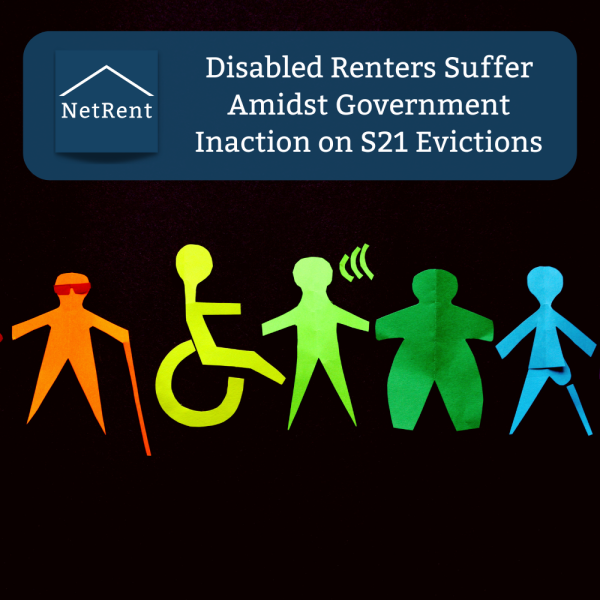
In a distressing turn of events reported in The Big Issue, a routine conversation between landlord and tenant for Tina, a disabled renter in London, escalated into a traumatic ordeal. After requesting minor repairs, Tina and her partner were shocked when the landlord insisted on extensive improvement work, forcing them to vacate. This narrative is not unique; it echoes the struggles of approximately three million disabled renters in England.
Tina’s experience is emblematic of a pervasive issue: the misuse of Section 21, or “no-fault,” evictions. Despite the government’s pledge to abolish these evictions in 2019, little progress has been made, leaving vulnerable renters at the mercy of a flawed system. Housing Secretary Michael Gove cites the need for court reform before implementing the ban, leaving disabled renters bearing the brunt of the delay.
The lack of affordable housing has pushed 87,000 disabled individuals into precarious temporary accommodation, as revealed by research from JustLife. For many, including Tina, a Section 21 eviction is the harsh reality they face.
Evictions are inherently disruptive, but for disabled renters, the consequences can be even more perilous. Tina, grappling with an anxiety disorder, found the situation so distressing that it led to a medical leave from work. Despite this, the landlord and letting agent persisted, demanding health assessments and exacerbating Tina’s health concerns.
Disturbingly, Tina’s plight is not an isolated incident. In 2023, no-fault evictions by bailiffs in England surged by almost 50%, leaving thousands of disabled renters anxious and searching for safe, accessible homes.
Rebekka Rumpel, an organizer at the London Renters Union, witnesses the fallout of the broken housing system daily, particularly in Lewisham, a London borough with alarming Section 21 eviction rates. Despite increasing homelessness and mounting evidence of the detrimental effects of evictions, the government continues to delay the Renter’s Reform Bill, a critical piece of legislation set to outlaw Section 21 evictions.
Campaigners, including Disability Rights UK, Shelter, and the London Renters Union, have urged Housing Secretary Michael Gove to expedite the bill. The proposed reforms aim to protect tenants from eviction for two years at the beginning of a tenancy, rather than the current six months.
The time for incremental changes has passed. The government must prioritize comprehensive reforms to establish a fairer, more accessible housing system. As disabled renters, the need for certainty and consistency in housing situations is paramount for independence. The key to independent living lies in appropriate housing, a choice, and control that should not be stripped away for those in private rentals.
The Renter’s Reform Bill holds the potential for systemic change, beginning with the abolition of the perilous Section 21 eviction. Renters, especially disabled individuals, cannot continue to be treated as a disposable income stream by profit-driven landlords. It is time for the government to act and put an end to a cruel law that has inflicted misery on countless individuals for far too long.