

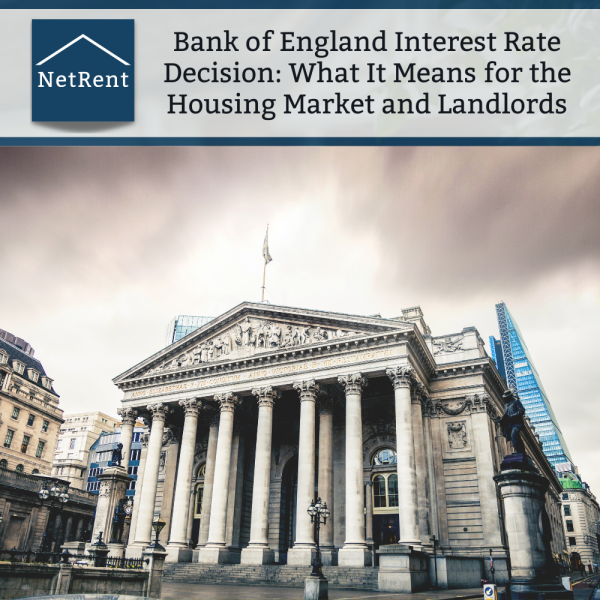
The Bank of England (BoE) has chosen to maintain the base rate at 4%, marking another cautious pause as it balances progress on inflation with the risk of slowing economic growth. While this stability may bring short-term relief, it also signals that the era of ultra-low borrowing costs remains out of reach for now.
This decision carries significant implications for the UK housing market and, in particular, for landlords navigating the buy-to-let landscape.
Why the Bank of England Held Rates
The BoE’s Monetary Policy Committee voted by a strong majority to keep the Bank Rate unchanged. Inflation, though easing from its previous highs, still sits well above the Bank’s 2% target. Policymakers remain wary of cutting rates prematurely and risking another surge in prices.
Economic growth also remains fragile. Consumer spending is subdued, business investment is cautious, and the job market shows early signs of softening. Against this backdrop, the BoE prefers a “wait-and-see” approach — allowing more time for existing rate hikes to filter through the economy.
In essence, this is a “higher for longer” strategy: rates may not rise further, but nor are they likely to fall quickly.
The Impact on the Housing Market
1. Affordability and Demand
A steady base rate means that lenders are unlikely to slash mortgage rates in the near term. Borrowing costs remain significantly higher than during the low-interest-rate era of the 2010s, keeping affordability stretched for many potential buyers.
First-time buyers and movers will find that mortgage repayments still consume a larger share of income than before, which continues to dampen demand. However, the decision to hold rather than raise rates does bring some welcome stability — buyers and sellers alike can plan with greater confidence.
2. House Price Trends
Stability tends to support confidence, but high borrowing costs cap price growth. The market is expected to remain flat or gently rising in most regions, with strong variation depending on local supply and demand.
-
In areas with tight supply and resilient demand, prices may edge upward.
-
Elsewhere, particularly where affordability is weakest, small price corrections could continue.
Crucially, holding the rate at 4% helps prevent a sharper market slowdown and gives households time to adjust.
3. Remortgaging and Fixed Deals
For many homeowners, the biggest concern is the expiry of their fixed-rate deals. Those coming off low-rate mortgages still face a sharp jump in repayments when they refinance.
While the BoE’s decision won’t directly lower costs, the predictability it offers allows lenders to plan better — meaning mortgage competition may slowly improve. Borrowers who monitor the market and act early may benefit from slightly more favourable deals as the year progresses.
The Consequences for Landlords
The buy-to-let sector remains under intense pressure. The decision to hold rates steady at 4% extends the period of elevated financing costs, squeezing profitability across many portfolios.
1. Borrowing Costs and Yields
Buy-to-let mortgage rates remain close to 5% on average, far above levels seen only a few years ago. For landlords on variable or tracker deals, this means continued strain on monthly cashflow. Those looking to refinance may find that new deals still require strong rental yields to meet lenders’ stricter affordability tests.
The result: landlords must be far more selective when acquiring or retaining properties. Margins are tight, and every expense — from mortgage interest to maintenance — carries more weight.
2. Rental Market Pressures
The elevated cost of homeownership continues to push would-be buyers into the rental sector, sustaining strong demand. At the same time, some landlords are selling up due to financial and regulatory pressures, reducing the supply of rental properties.
This combination — high demand and limited supply — is likely to keep rents rising, though tenant affordability remains a growing concern. Landlords need to strike a delicate balance between covering higher costs and retaining reliable tenants.
3. Strategic Shifts for Landlords
To weather this environment, landlords may consider:
-
Locking in longer-term fixed rates to protect against uncertainty.
-
Refinancing portfolios to release equity or reduce leverage.
-
Diversifying into higher-yield regions or alternative property types.
-
Improving energy efficiency and property quality to attract premium tenants and meet future regulation.
With potential reforms to landlord taxation and rental legislation still on the horizon, professionalisation within the sector is accelerating. Those with sound finances and strong management will continue to perform, but weaker operators may find it difficult to sustain profitability.
What This Means Going Forward
The BoE’s cautious stance suggests that interest rates may remain around current levels for several months. Inflation is easing, but not fast enough to justify a cut. Until clear evidence of sustainable price stability emerges, landlords and homeowners alike should prepare for a prolonged period of steady but elevated borrowing costs.
Key factors to watch include:
-
Further progress on inflation.
-
The pace of wage growth and labour-market resilience.
-
Changes in government fiscal policy or housing-related taxation.
-
Mortgage-lender competition and product availability.
Conclusion
The Bank of England’s decision to hold the base rate at 4% signals a phase of cautious stability for the UK economy. For the housing market, it offers predictability — neither boom nor bust conditions, but a steady adjustment to higher borrowing costs.
For landlords, however, the picture remains challenging. Strong rental demand offers opportunity, yet high finance costs and tighter regulations mean profitability depends more than ever on prudent financial management and strategic foresight.
In the coming months, stability will be the key theme — but adaptability will determine who thrives in this new normal of “higher for longer” interest rates.