

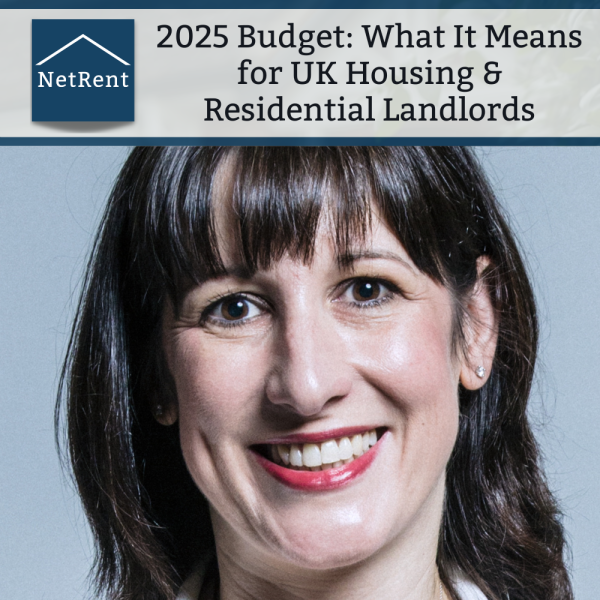
Rachel Reeves has delivered her Budget as Chancellor, and as expected it places a significant tax burden on wealth, property and unearned income. For residential landlords, the message is clear: while National Insurance has not been extended to rental income, landlords will still face higher taxes, frozen thresholds and increased operating pressures.
This article breaks down the key measures affecting UK housing and what they mean for the Private Rented Sector (PRS).
1. Higher Income Tax on Rental Income
The headline change
The government will raise income tax rates on property income, dividends and savings by 2 percentage points from April 2027.
For landlords holding property in their own name, the tax bands on rental profits will rise to:
-
22% (basic rate)
-
42% (higher rate)
-
47% (additional rate)
This is designed to narrow the gap between tax paid on employment income and unearned income such as property profits.
Who is affected?
-
All individual landlords operating as sole traders or partnerships.
-
Limited company landlords are unaffected at the rental-profit level, though dividend withdrawals from a company will also be taxed 2% higher.
Example impact
A landlord with £20,000 of rental profit:
-
At 20%: £4,000
-
At 22%: £4,400
That’s £400 more tax each year, before factoring in frozen thresholds.
Sector implications
Industry voices are already warning that:
-
Marginal properties may become loss-making.
-
Some landlords may exit the sector.
-
Upward pressure on rents is likely where supply tightens.
2. Income Tax Threshold Freeze Extended to 2031
The Budget extends the freeze on all major income tax thresholds to 2031.
This means:
-
As wages and rents rise, more taxpayers are pulled into higher bands.
-
Landlords with mixed income (employment + rental) are particularly exposed.
-
More rental income will be taxed at 42% for many mid-income landlords over the coming years.
Combined with the 2% property income rise, this becomes a significant long-term erosion of net yields for individual landlords.
3. High-Value Property Surcharge (“Mansion Tax”)
The Budget introduces a new High Value Council Tax Surcharge from April 2028.
Key features
-
Applies to properties valued at £2 million or more.
-
Structured as an annual surcharge on top of standard council tax.
-
Expected tiers:
-
£2m–£2.5m: approx. £2,500 per year
-
£5m+: approx. £7,500 per year
-
The measure is aimed at redistributing wealth from the top end of the housing market.
Impacted landlords
-
Owners of high-value London or South East properties
-
Investors with prime or super-prime buy-to-lets
-
Some long-term owners whose property values have risen significantly
Most standard BTL landlords will not be caught by this, but the policy is important because it signals a shift toward taxing housing wealth more aggressively.
4. National Insurance on Rental Income – Not Introduced
Despite significant speculation, the government has not extended National Insurance to rental income.
Landlord groups feared this most, as it would have added a further 8–10% tax burden. The Chancellor chose instead to raise income tax rates on property income by 2%.
While this is less severe than expected, the overall fiscal direction remains challenging for small landlords.
5. Measures Indirectly Affecting Landlords & Tenants
a) Energy bill reductions
A reform of green levies will reduce typical household energy bills by around £150 per year.
Impact on landlords:
-
Tenants should face slightly less financial pressure.
-
HMO landlords who include bills may see a modest operating cost benefit.
b) Removal of the two-child benefit cap
The government will lift the two-child limit on welfare payments.
This could:
-
Boost incomes for lower-income families
-
Improve rent affordability for tenants
-
Increase demand for family-sized rental homes
c) Economic context
Tax as a proportion of GDP remains historically high. Growth forecasts are modest, putting continued pressure on household finances. This keeps demand for rented homes strong but limits how far rent rises can be pushed in some regions.
6. The Bigger Picture for Landlords
Taking all measures together, the outlook is:
More tax for individual landlords
-
Higher property income rates from 2027
-
Threshold freezes dragging more income into higher bands
Pressure on high-value assets
-
Annual surcharges for £2m+ homes
-
Signals a potential direction of travel for future wealth taxation
Regulatory and compliance pressures
-
Continued implementation of the Renters’ Rights Act
-
Increasing licensing, EPC reform expectations, and compliance complexity
Market implications
Expect:
-
More landlords to sell off marginal properties
-
Further migration to limited company structures
-
A long-term shift from small private landlords to institutional operators
-
Rents rising if supply contracts while demand remains high
7. Practical Next Steps for Landlords
1. Re-model your portfolio under 2027+ tax rules
Run projections using 22% / 42% / 47% tax rates and frozen thresholds.
2. Review your ownership structure
For future acquisitions, limited companies may remain more tax-efficient.
3. Assess portfolio quality
Consider disposing of low-yield, high-cost or high-void properties.
4. Strengthen rent and arrears management
Focus on affordability checks, communication and early arrears interventions.
5. Monitor the £2m+ surcharge consultation
If owning high-value property, build the surcharge into long-term planning.
6. Keep updated on upcoming Renters’ Rights Act regulations
Secondary legislation will shape compliance obligations over the next 12–24 months.
Disclaimer
NetRent does not provide legal advice. This article reflects our understanding of the Budget at the time of writing and is for general information only. Landlords should obtain professional legal or tax advice before making decisions based on these measures.
NetRent Contact Details
Telephone: 01352 721300
Email: support@netrent.co.uk