

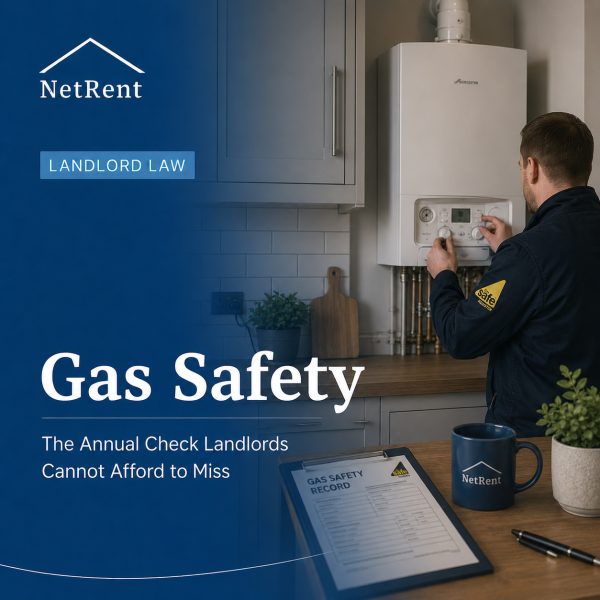
Gas safety is one of the most important responsibilities for residential landlords.
Most landlords know they need a gas safety certificate, but the duty is wider than simply booking an annual appointment and filing away the paperwork.
Landlords need to make sure gas appliances, flues and relevant pipework are safe, properly maintained and checked by a Gas Safe registered engineer. They also need to give tenants the correct record and keep evidence that the duty has been met.
The key message is simple: gas safety is not optional, and poor record-keeping can create serious risk.
What landlords are responsible for
Where a rented property has gas appliances or gas systems supplied by the landlord, the landlord is responsible for ensuring they are safe.
This may include:
- gas boilers;
- gas fires;
- gas cookers supplied by the landlord;
- gas pipework;
- flues;
- ventilation connected to gas appliances.
The landlord’s responsibility is not limited to the boiler. If the landlord provides a gas appliance, it should be included in the safety regime.
Tenants may be responsible for their own gas appliances, but landlords should still take care where a tenant-owned appliance connects to the property’s flue or installation. If in doubt, it should be checked properly by a qualified professional.
The annual gas safety check
Landlords must arrange a gas safety check every 12 months.
The check must be carried out by a Gas Safe registered engineer. It is not enough to use a general handyman, plumber or contractor unless they are properly registered and qualified for the specific type of gas work required.
The engineer will check relevant appliances and flues and produce a gas safety record. This is often referred to as a gas safety certificate or CP12.
Landlords should diarise renewal dates well in advance. Waiting until the last few days can create problems if the engineer is unavailable, access is delayed or remedial works are needed.
The gas safety record
After the check, the landlord should receive a written gas safety record.
This record usually confirms:
- the property address;
- the appliances or flues checked;
- the date of the inspection;
- the engineer’s details;
- the engineer’s Gas Safe registration details;
- any defects found;
- any remedial action required;
- whether the appliance is safe to use.
The record is a key compliance document. It should be stored safely and easy to access.
Giving the record to tenants
Landlords must give tenants a copy of the gas safety record.
For existing tenants, this should be done within the required timeframe after the check. For new tenants, the record should be provided before they move in.
Landlords should keep evidence that the record was given.
Useful evidence may include:
- email delivery records;
- tenant acknowledgement;
- signed check-in paperwork;
- agent confirmation;
- dated covering letters;
- document upload records from a property management system.
Simply having the certificate is not enough if the landlord cannot show that the tenant received it.
Maintenance is separate from the annual check
The annual gas safety check is not the same as ongoing maintenance.
A landlord should also make sure gas appliances, flues and relevant pipework are kept in safe condition throughout the tenancy.
This means landlords should respond promptly where tenants report:
- boiler faults;
- smell of gas;
- carbon monoxide alarm activation;
- poor heating;
- appliance defects;
- unusual boiler noises;
- signs of incomplete combustion;
- ventilation problems.
A gas safety certificate from several months ago does not remove the need to act if a problem is reported later.
What if access is difficult?
Sometimes tenants do not respond to appointment requests or refuse access.
Landlords should not ignore the problem. They should keep clear records showing reasonable attempts to arrange the check.
This may include:
- written appointment requests;
- reminder emails;
- text messages;
- letters;
- proposed alternative dates;
- agent notes;
- contractor attendance records;
- tenant responses.
The landlord should continue to take reasonable steps to gain access. A tenant’s lack of cooperation may help explain delay, but the landlord still needs evidence of what was done.
Unsafe appliances
If an engineer identifies an unsafe appliance, landlords must take the issue seriously.
Depending on the risk, the appliance may need to be repaired, disconnected, replaced or left out of use until safe.
Landlords should not ask tenants to continue using an appliance that has been identified as unsafe.
Where remedial work is required, landlords should keep:
- the original gas safety record;
- the engineer’s warning notice if issued;
- repair invoices;
- replacement records;
- confirmation that the appliance is safe after work is completed;
- communications with the tenant.
Carbon monoxide alarms
Gas safety also links to carbon monoxide protection.
Landlords should make sure carbon monoxide alarms are fitted where required and that alarms are working at the start of the tenancy. If a tenant reports that an alarm is faulty, the landlord should act promptly.
Carbon monoxide is dangerous because it cannot be seen or smelled. A working alarm can be critical.
Why gas safety records matter more now
The Renters’ Rights Act has made landlord record-keeping even more important.
Possession, complaints, enforcement and future private rented sector regulation are becoming more evidence-led. Gas safety records are likely to remain one of the core documents landlords need to produce quickly.
A landlord should be able to show:
- when the last gas safety check was carried out;
- who completed it;
- whether the engineer was Gas Safe registered;
- whether any defects were found;
- what remedial work was done;
- when the tenant received the record;
- when the next check is due.
Poor records can create problems even where the landlord believes the check was completed.
Common landlord mistakes
1. Treating the certificate as the only duty
The annual record matters, but maintenance and tenant safety matter throughout the tenancy.
2. Forgetting the renewal date
Gas safety checks should be diarised well before expiry.
3. Using the wrong contractor
Only a properly Gas Safe registered engineer should carry out gas safety checks and gas work.
4. Not giving the record to the tenant
The landlord should keep evidence that the tenant received the gas safety record.
5. Ignoring tenant reports after the annual check
A recent certificate does not mean later faults can be ignored.
6. Failing to document access attempts
Where tenants delay access, landlords should keep a clear paper trail.
7. Not acting on defects
Any unsafe or defective gas appliance should be dealt with promptly and professionally.
Practical checklist for landlords
Landlords should:
- check when each property’s gas safety record expires;
- book the next inspection early;
- use a Gas Safe registered engineer;
- confirm the engineer is registered for the relevant work;
- give the record to tenants on time;
- keep evidence of service;
- retain previous gas safety records;
- act quickly on defects;
- keep repair and replacement records;
- document access attempts;
- check carbon monoxide alarm duties;
- keep gas safety documents in the property compliance file.
The key takeaway
Gas safety is one of the core landlord duties.
It is not just an annual certificate. It is a continuing responsibility to keep gas appliances, flues and relevant pipework safe, to use the right engineer, to give tenants the record and to keep proper evidence.
In a more regulated rental market, landlords cannot afford gaps in gas safety paperwork or delays in dealing with defects.
A safe property, current gas safety record and clear paper trail remain essential parts of responsible letting.
NetRent does not provide legal advice. This article represents our understanding of rental property law at the time of writing.
Telephone: 01352 721300
Email: support@netrent.co.uk