

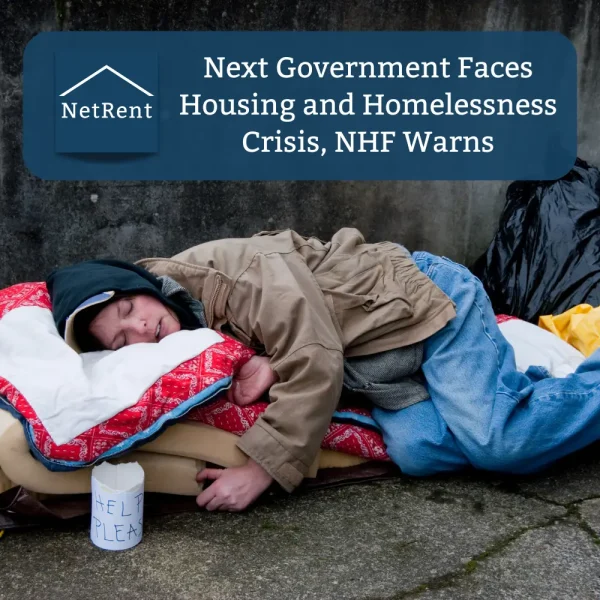
The incoming government will confront a severe housing and homelessness crisis, highlighted by an increase in rough sleeping and a record number of children in temporary accommodation, according to research by the National Housing Federation (NHF). As party manifestos outline their strategies, the NHF calls for ambitious, long-term housing plans to address these urgent issues.
Manifesto Commitments on Homelessness
Both Labour and the Conservatives have committed to ending rough sleeping, though without specific deadlines. The Liberal Democrats, however, have pledged to end rough sleeping “within the next parliament.” The Conservative Party’s current stance marks a retreat from their 2019 promise to end rough sleeping by 2024, a goal that remains unmet.
Labour plans to tackle the broader crisis of temporary accommodation and insecure housing, criticizing the rise in ‘hidden homelessness’. They propose a cross-government strategy, collaborating with mayors and councils nationwide, likely coordinated by a new Office of the Deputy PM and modelled on the Blair government’s Rough Sleepers Unit.
The Liberal Democrats aim to address “all forms of homelessness,” while the Conservatives intend to continue their prevention efforts and review temporary accommodation quality through the Local Authority Housing Fund.
Social Housing and Housebuilding Plans
The NHF has consistently advocated for building 90,000 social homes annually. Labour’s manifesto sets a target of 1.5 million homes over five years, with the Conservatives promising 1.6 million and the Liberal Democrats 1.9 million. Labour emphasizes prioritizing new social rented homes, while the Conservatives’ Affordable Homes programme will deliver homes of all tenures. The Liberal Democrats uniquely commit to building 150,000 social rented homes per year.
Renters Reform Bill
There is a consensus among parties to abolish Section 21 evictions, much to the relief of private renters. Labour and the Liberal Democrats promise to ban no-fault evictions immediately, while the Conservatives condition their commitment on necessary court reforms.
Public Spending and Economic Benefits
Both Labour and the Conservatives adopt cautious spending approaches, with neither allocating specific funding to end rough sleeping and homelessness, nor setting targets for building social housing. They do, however, promise multiyear funding settlements to councils, aimed at improving the commissioning environment for supported accommodation, without committing additional resources.
The NHF emphasizes that tackling homelessness is economically beneficial. Supported housing saves the public sector £22,000 per person compared to long-term homelessness, with every £1 invested in Housing First yielding £1.24 in public sector savings. A one-time investment in 90,000 social homes would generate a £11.9 billion net profit for the Treasury over 30 years. The NHF will continue to advocate for these economic benefits with the new government.
Migrant Communities at Risk
From July to December 2023, rough sleeping among successful refugees exiting Home Office accommodation surged by 1,116%, straining NHF members’ supported accommodation and rough sleeper services. Despite immigration’s prominence in the election, increasing rates of migrant homelessness have been largely ignored in Labour and Conservative manifestos.
The Conservatives plan to implement their Rwanda scheme and the Illegal Migration Act, while Labour vows to scrap the Rwanda scheme, establish a returns and enforcement unit, and hire caseworkers to reduce the asylum backlog. The Liberal Democrats propose extending the Home Office move-on period to 60 days to prevent newly recognized asylum seekers from becoming homeless, aligning with NHF recommendations.
Conclusion
The NHF finds it encouraging that all parties commit to ending rough sleeping, but warns that addressing the broader homelessness crisis requires significant spending on welfare, supported accommodation, and social housebuilding. The NHF, alongside other key organizations, has signed Homeless Link’s joint letter urging party leaders to commit to essential policies to end homelessness in the UK.